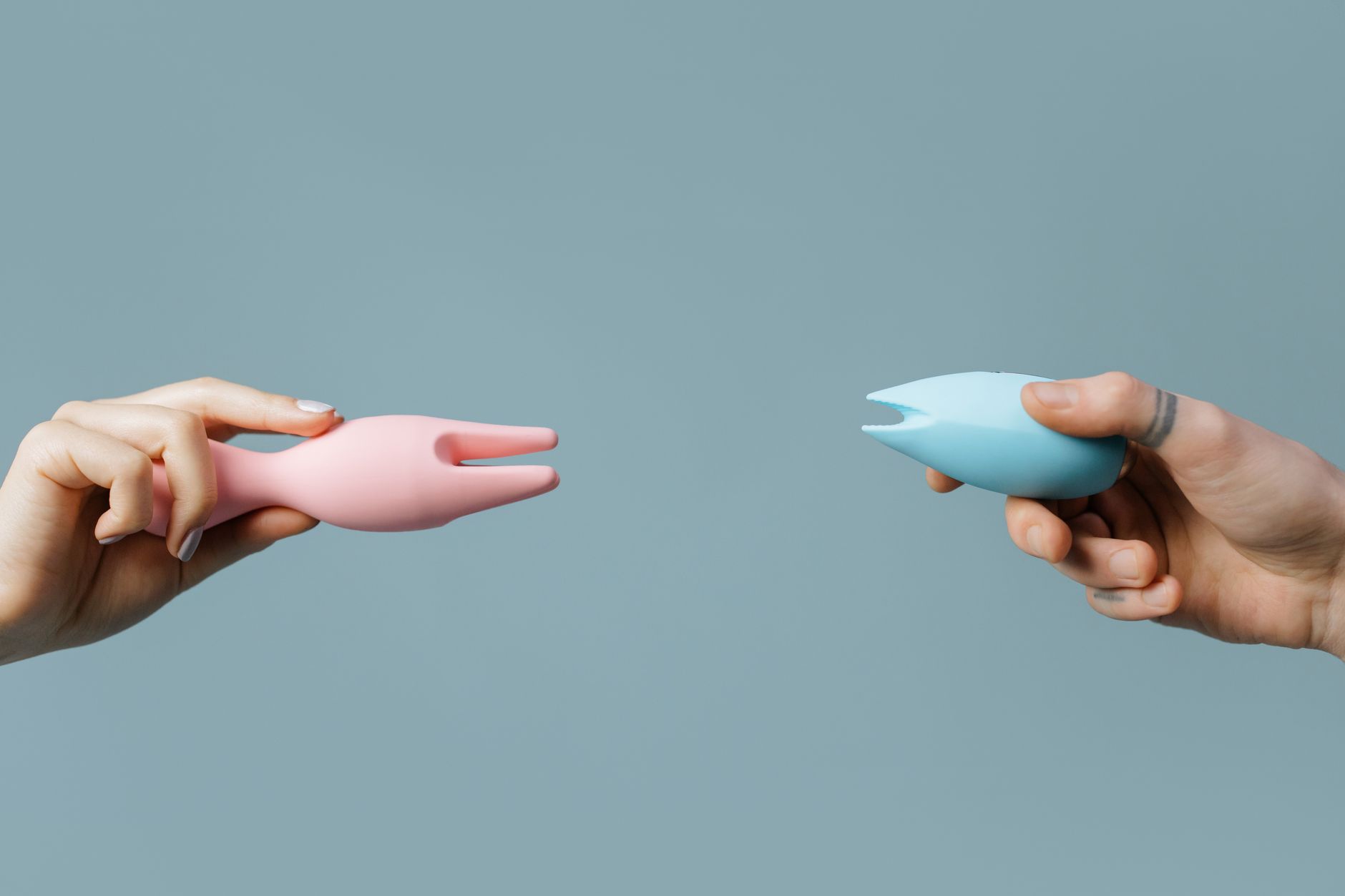
The anxiety paradox nobody talks about
Honestly, here's the thing: anxiety doesn't just kill the mood. It hijacks your entire nervous system and convinces your body that arousal is dangerous. And the more you try to force pleasure through that wall, the higher the wall gets.
That's not a personal failure. That's neurobiology.
When your brain perceives threat (whether it's past trauma, relationship tension, work stress, or just the pressure to "perform"), your sympathetic nervous system takes the wheel. Blood pools away from your genitals. Your pelvic floor tenses. Your skin gets less sensitive. And then the real damage happens: you start watching yourself, judging, wondering why it's not working. That's the anxiety loop, and it feeds itself.
Most advice tells you to "relax" or "be present." That's like telling someone with insomnia to just sleep. It doesn't work because you can't think your way out of a nervous system problem. You have to bypass it.
That's where lemon vibrators, especially air-suction devices like the Lem, become genuinely useful.
Why anxiety disrupts arousal more than you realize
Your clitoris has about 8,000 nerve endings. But those nerves only fire when your parasympathetic nervous system is in charge. That's the "rest and digest" mode where pleasure actually happens. When anxiety flips you into sympathetic mode, those nerves go quiet, no matter how much stimulation you're throwing at them.
This happens in specific ways:
Cortisol blocks dopamine. High stress hormones actively suppress the neurotransmitters that create desire and pleasure. You're not broken; your chemistry is just literally working against you.
Your pelvic floor locks up. Anxiety causes involuntary tension in the muscles around your genitals. This makes direct touch feel numb or even painful. It's a protective response, but it's also a barrier.
Your attention fractures. You're partly in your body, partly watching yourself from outside it. That split focus (what therapists call "spectatoring") kills arousal faster than anything else.
The solution isn't more willpower. It's a tool that works WITH your nervous system instead of against it.
How suction-based clitoral vibrators bypass the anxiety trap
Unlike traditional vibrators, which rely on your pelvic floor relaxing enough to feel friction, air-suction devices work differently. They stimulate through gentle pressure waves rather than direct contact. This matters hugely when you're anxious because your body doesn't have to relax as much to feel something.
A Lem or similar lemon clitoral vibrator creates rhythmic suction that wakes up nerve endings without requiring the kind of muscular surrender that anxiety prevents. You can be tense and still feel it. You can be numb and still feel it.
This is why many people report that suction vibrators are their first real orgasm after years of numbness or anxiety. They're not more powerful; they're just accessing the nervous system through a different door.
The psychology of taking control back
Here's something therapists know that most people don't: pleasure isn't passive. The moment you decide "I'm going to explore this on my own terms, in my own way, at my own pace," you've already shifted your nervous system.
When you're anxious about performance with a partner, you're in a reactive state. Someone else is driving. When you're alone with a tool designed to feel good, you're the driver. That autonomy is not a small thing. It's foundational.
Lemon vibrators, especially ones designed for intuitive use, put you back in control. You choose the pattern. You choose the intensity. You can start at level 1 and spend 20 minutes there if you need to. There's no audience, no timeline, no right way to do it.
That shift from "performing pleasure" to "discovering pleasure" is where the healing actually starts.
Starting small when anxiety is high
If you're dealing with significant anxiety around pleasure, the worst thing you can do is jump to an intense vibrator and expect magic. Your nervous system will fight it.
Instead:
Start with lower intensities. Most air-suction vibrators, including lemon clitoral vibrators, have multiple settings. Begin at pattern 1 or 2, not the max. You're teaching your body that sensation is safe, not shocking it into submission.
Build a ritual, not a performance. Dedicated time to explore, maybe 30 minutes alone, is miles better than spontaneous quickies. Rituals tell your nervous system "this is safe, we've done this before."
Expect plateaus. Some sessions will feel amazing. Others will feel like nothing. That's normal, especially when you're rewiring an anxious system. The goal isn't constant intensity; it's consistency.
Use it as a bridge, not the end goal. If you eventually want partnered sex that feels good, solo exploration with a lemon sucker or Lem becomes the place where you remember what pleasure actually feels like. Then you bring that memory back to partnership.
When to bring it into partnered situations
Once you've found your rhythm solo, partnered use becomes less about introducing a "toy" and more about saying "this is what works for my body, and I'd like to share it."
Anxious people often avoid this conversation because it feels like admitting failure. It's not. It's the opposite. It's knowing yourself well enough to ask for what actually works.
Many partners feel relieved. Seriously. Because it takes the pressure off them to "figure you out," and it usually means better sex for everyone involved. When communication breaks down, these conversations get harder, but they're possible.
The Lem or similar air-suction lemon clitoral vibrator becomes less "this is what I need instead of you" and more "this is the key to unlocking what we can do together."
Beyond the vibrator: what else needs to shift
A great clitoral vibrator will help, but it's not a solo solution. Anxiety about pleasure usually has roots in older stuff: relationship patterns, trauma, shame conditioning, stress load, or all of the above.
If you're in a relationship, this might be the time to talk to a couples therapist, not because anything is "wrong," but because anxiety often lives in the space between two people. A professional can help you both understand the pattern and actually change it.
If you're single, solo exploration is powerful, but so is processing where the anxiety comes from. Therapy works. So does breathwork. So does naming the specific thought loop that kills your pleasure ("I'm taking too long," "I'm doing this wrong," "they're judging me") and interrogating whether it's actually true.
The vibrator is a tool. The nervous system work is the foundation.
The specifics: what makes lemon vibrators different
Nancy's Lem and similar lemon sexual toys use air-pulse technology, which is quieter, gentler, and frankly less intimidating than traditional vibrators if you're already anxious. They're designed to feel like skin-to-skin suction rather than a buzzing sensation.
This matters psychologically too. A device that feels nurturing rather than clinical will keep your nervous system calmer from the moment you pick it up. That matters more than you'd think.
FAQ: Anxiety, pleasure, and lemon vibrators
Can a vibrator actually help with anxiety-based numbness?
Yes, but not through willpower. Air-suction vibrators like the Lem work because they bypass some of the nervous system barriers that anxiety creates. You don't have to relax your pelvic floor as much to feel suction, which means you can experience pleasure even when you're tense. Consistency matters more than intensity.
What if I'm on anxiety medication and worried about numbness?
Many SSRIs dull sensation, and that can stack with anxiety-based numbness. It's worth talking to your doctor about whether your current dose is necessary or if timing adjustments might help. In the meantime, air-suction devices often work better than vibrators for medication-related numbness because they use pressure waves instead of friction.
How long does it take to "rewire" pleasure when anxiety has killed it?
There's no set timeline. Some people feel a shift within weeks of consistent solo exploration. Others need months or longer, especially if there's trauma involved. The key is consistency without pressure. If you're forcing it, you're still in the anxiety loop.
Should I use a lemon vibrator solo or with a partner if I have anxiety?
Start solo. Absolutely. Your nervous system needs to learn that pleasure is safe in the safest possible context, which is alone with yourself and a tool you control. Once you've built that association, partnered use becomes less triggering.
What if the vibrator doesn't work and I feel worse?
That's information, not failure. Sometimes anxiety is too high for even a good tool to work, which means the real work is nervous system regulation first (therapy, medication adjustment, stress reduction) and the vibrator later. Don't push through resistance. Work with a professional instead.
Is it normal to feel guilty about needing a vibrator to feel pleasure?
It's incredibly normal, and it's also not based in reality. Every body is different. Some bodies need different kinds of stimulation, especially when anxiety has rewired the system. Using a tool that works for your body isn't a compromise; it's self-knowledge.
The actual outcome
Here's what tends to happen when anxiety stops blocking pleasure: you don't just feel better during sex. You start to trust your body again. You stop watching yourself. You remember that you're allowed to feel good, and that permission extends to other parts of your life too.
That's not sex therapy magic. That's just what happens when your nervous system finally believes you're safe. A good lemon clitoral vibrator, combined with some real attention to the anxiety underneath, can be the beginning of that shift.
Your pleasure matters. And it's worth the work to get it back.